
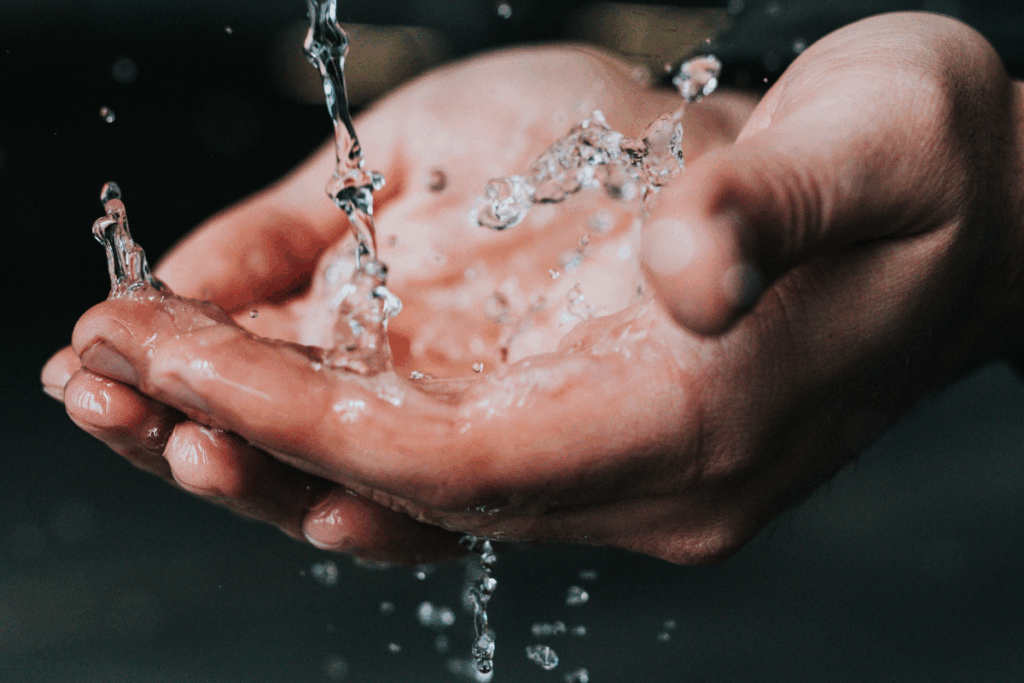
A crisis we can no longer ignore
The global water crisis can no longer be ignored. The adverse effects are felt wherever people live, work, and recreate. Worldwide, water resources are under pressure from all sides: climate change, growing demand, toxic pollution, and years of poor management and governance. This undermines progress across multiple SDGs, including gender equality, access to safe water and sanitation, and protection of our oceans and aquatic ecosystems.
Because water connects everything, from its source to the seas. When these natural systems are damaged, the consequences reach far beyond the immediate effect into public health, food security, livelihoods, and climate resilience.
Women and girls carry the heaviest burden
Women and girls bear a disproportionate share of these burdens, both physically and cultural and economic norms. During 2023, an estimated 380 million women lived under severe water stress, and the number of affected women is projected to rise sharply in the coming decades. Inadequate access to safe, fresh water increases disease risks, limits education and economic participation, increases unpaid care, and intensifies vulnerability to climate shocks. At the same time, degradation of oceans and coastal waters threaten women’s homes, health, and sources of income.
Women are also leading the change
Yet women and girls are not passive victims of this multifaceted crisis. Around the world, they are protecting water resources, sustaining local knowledge, developing innovative approaches, and leading struggles for environmental and climate justice. Soroptimist International of Europe contributes to clean water access through the following member-led projects:
- Solvatten, by SI Sweden
- Clean wells, by SI Chernihiv (Ukraine), in collaboration with the following SIE Danish clubs: Aarhus, Ringkobing, Silkeborg, Skanderborg, Grenaa, Brande, Ikast, Skjern-Tarm, Herning and Odder.
The time to act is now
Women leadership is essential, but too often absent from the spaces where water policies and investments are decided. This is why we need to step up our advocacy now. In this UN International Year of Water and Gender Equality, and as we move toward the 2026 UN Water Conference, we have a critical opportunity to change how water governance is shaped — and who is heard.
We all need to engage politicians, opinion leaders, and community members to understand the linked reality of gender equality, water justice, and environmental responsibility. This crisis cannot be solved at the political or community levels alone. Unsafe and polluted water is not mainly caused by individuals, but is produced by industrial pollution, extractive practices, weak enforcement of laws, and systems that allow environmental harm without accountability.
Regulation, responsibility, and rights
Our advocacy effort is not only about raising awareness. It is also about regulation, responsibility, and rights. Real solutions require global action: stronger legal frameworks, corporate accountability, gender-responsive water governance, and the full and meaningful participation of women and girls at every level of decision-making.
Water justice is a matter of equity and dignity. Women and girls must be recognised not only as affected parties, but as leaders shaping the way forward.
By Pascale Muylaert, SI UN Representative in Geneva
Janet Schempf, Soroptimist International of the Americas
Hala Ghoson, Research Pharmacist, University of Texas Medical Branch