

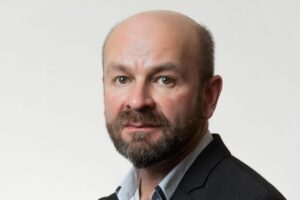
On 4 May 2026, Soroptimist International of Europe (SIE) organised a webinar featuring guest speaker Neil Datta, Director of the European Parliamentary Forum for Sexual and Reproductive Rights (EPF). Mr. Datta is regarded as one of Europe’s leading experts on anti-gender and anti-rights movements. The webinar was opened and hosted by SIE President Sabine Reimann. Moderation was provided by Agnes Verhulst, Advocacy Coordinator of SI Kingdom of the Netherlands and Suriname, who guided the discussion and facilitated questions from participants across Europe.
The Background: CSW70 in New York
An important trigger for organising this webinar came from experiences of the SIE delegation during the 70th session of the Commission on the Status of Women (CSW70) in March 2026 in New York. During several side events, delegation members came across the growing visibility and influence of organisations attacking European democracies by opposing gender equality, sexual and reproductive rights, women’s rights, and human rights more broadly. These experiences raised questions about the background, funding, and methods of such organisations. Seeking to gain a deeper understanding and to share this knowledge with Soroptimists across Europe, SIE invited Neil Datta to deliver an in-depth webinar.
How These Movements Operate
In his presentation, Datta painted an alarming picture of an international network of organisations active on both sides of the Atlantic. According to him, many of these anti-democratic organisations often present themselves primarily as anti-abortion or anti-SRHR organisations (Sexual and Reproductive Health and Rights), since these issues have been the subject of public and political debate for decades and therefore provide an effective basis for mobilisation.
Behind this visible agenda, however, Datta argued that there is often a broader ideological objective. Many of these networks aim to dismantle the democratic rule of law as well as the European Union. They do not only operate through anti-abortion organisations; anti-gender-equality organisations, anti-women’s-rights organisations, and organisations opposing LGBTQ+ rights are also used to advance an anti-democratic agenda.
Datta demonstrated how these movements have become increasingly professionalised. Whereas attention was once focused primarily on public campaigns, the emphasis today is increasingly on influencing policymaking, legal proceedings, international organisations, and democratic institutions. This is achieved through extensive international networks, strategic communication, and significant financial resources. In Europe alone, funding for the period 2019–2023 amounted to approximately US$1.18 billion.
What Are ChNGOs?
One of the concepts Datta explained was that of so-called ChONGOs (Christian Organized Non-Governmental Organisations). These are organisations that present themselves as independent NGOs while maintaining close ties to conservative Christian networks and interests. According to Datta, they play a significant role within international anti-rights networks.
By participating in international conferences, consultations, and United Nations meetings, they create the impression that they represent broad public support, while in reality they are often part of larger, internationally funded anti-democratic structures. In this way, they can exert considerable influence on policymaking and public opinion.
Why This Matters to Soroptimists
The central message of the webinar was that resistance to women’s rights and gender equality is not limited to isolated national initiatives. According to Datta, it is a well-organised, cross-border movement in which organisations, think tanks, political actors, and lobbying groups collaborate to influence legislation and policy.
For Soroptimists, this was an important message. The objectives of our organisation, advancing women’s rights and improving the position of women and girls, are directly connected to the issues addressed in the presentation. Understanding the strategies and methods of anti-rights movements helps us better recognise the challenges facing the rights of women and girls and underscores the importance of sustained civic engagement.
The Five Ds: How to Resist
At the end of the webinar, Datta presented a strategy for resisting anti-rights and anti-democratic networks: the Five Ds.
The first step is “Discover and Disrobe”: investigate who these organisations are, how they operate, and what interests and networks lie behind them. According to Datta, a ChONGO has even gained access to an important committee of the Council of Europe.
The second step is “Disarm”: counter misinformation, manipulative narratives, and improper influence strategies through facts and transparency.
The third step is “Dislocate”: disrupt the connections between organisations, financiers, and political actors that support these movements.
The fourth step is “Demonetise”: gain insight into funding streams and, where possible, restrict access to resources that support anti-democratic activities. As Datta demonstrated, part of this funding originates from European public institutions.
Finally, “Defend” means actively protecting human rights, democratic institutions, the rule of law, and the rights already secured for women and girls. According to Datta, this requires not only vigilance but also cooperation among civil society organisations, policymakers, and citizens who seek to strengthen democratic values.
HARD-ONE RIGHTS CANNOT BE TAKEN FOR GRANTED
The webinar made it clear that hard-won rights should never be taken for granted. Progress in gender equality requires continuous attention, cooperation, and a strong voice from civil society. This is precisely where Soroptimists have an important role to play: continuing, at the local, national, and international levels, to advocate for a world in which women and girls enjoy equal opportunities and their rights are respected.
With this webinar, SIE once again made a valuable contribution to raising awareness of current developments affecting the position of women in Europe. It provided participants not only with insight into today’s challenges but also with practical tools to continue actively defending democratic values, human rights, and gender equality.
The importance of HOLDING THE LINE cannot be overstated.
By Linda Brouwers, Istanbul Convention Promoter, SIE delegation member to CSW70, member of SI Gooische Meeren (Netherlands)